
Miniature Nuclear Batteries: Can Radioisotope Sources Power Devices for Decades?
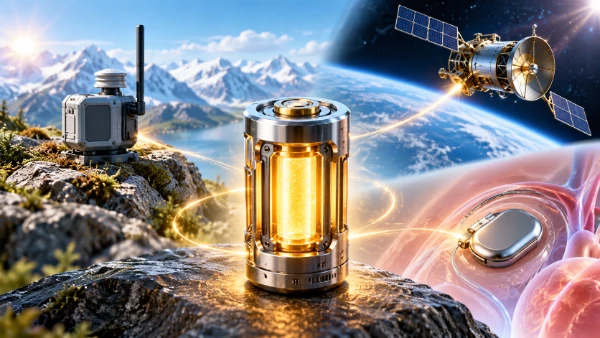
A battery that keeps working for twenty, fifty or even hundreds of years sounds more like science fiction than an engineering product, yet the basic idea is already real. Miniature nuclear batteries, more accurately described as radioisotope batteries, obtain energy from the natural decay of radioactive isotopes rather than from a chemical reaction that is gradually exhausted by charging and discharging. They are not miniature nuclear reactors, and they do not sustain a chain reaction. Their strength is longevity: a carefully chosen isotope can release energy at a predictable rate for years or decades with no moving parts and, in some designs, no need for recharging. Their weakness is equally important. Most small radioisotope batteries produce very little electrical power, often in the microwatt or nanowatt range, so they are better suited to sensors, memory backup, tracking electronics and other low-energy equipment than to phones, laptops or electric vehicles. As of 2026, the technology spans proven commercial products, long-established space power systems and newer laboratory designs that are still being developed.
How Miniature Nuclear Batteries Generate Long-Term Power
The simplest way to understand a nuclear battery is to think of radioactive decay as a slow, steady energy source. An unstable isotope changes naturally into a more stable form and releases energy during that process. Engineers place a small quantity of the isotope inside a structure designed to capture part of that energy and convert it into electricity. Because the decay is governed by the physical properties of the isotope, the battery does not need fuel to be pumped in, does not depend on sunlight and does not have to be recharged in the usual sense. Output gradually falls as the isotope decays, but that decline can be predictable over a very long period. The result is not a battery that stores a fixed amount of charge and then suddenly becomes empty; it is closer to a tiny generator that produces a continuous trickle of electricity for as long as enough radioactive material remains active.
Several conversion methods exist, but two are especially useful for understanding the technology. Radioisotope thermoelectric generators, or RTGs, use heat from radioactive decay and convert the temperature difference into electricity. NASA and the US Department of Energy have used this approach for decades on spacecraft because it is reliable when sunlight is weak or unavailable. The Multi-Mission Radioisotope Thermoelectric Generator used for missions such as the Perseverance rover is designed to provide roughly 110 watts at the beginning of a mission, which is far more than a microbattery but still modest compared with everyday mains electricity. At the smaller end of the scale are betavoltaic batteries. These devices use beta particles emitted by isotopes such as tritium, nickel-63 or carbon-14 and convert their energy directly in a semiconductor, in a process often compared with a solar cell receiving particles rather than light.
This distinction matters because the phrase “nuclear battery” covers devices with very different sizes and outputs. Space RTGs can power instruments, computers and heaters, while miniature betavoltaic cells may supply only tiny amounts of current. That limited current is not necessarily a failure. Many modern electronic systems spend most of their time asleep and wake only briefly to measure, store or transmit data. A radioisotope source can provide the constant low-level input needed for such a device, or it can slowly charge a capacitor or secondary cell that later delivers a short burst of higher power. In this role, the main advantage is not high performance at any given moment but the possibility of leaving an inaccessible device unattended for years. That changes the economics of equipment placed underground, underwater, inside infrastructure, in remote scientific stations or in space, where sending a person or machine to replace an ordinary battery can cost far more than the electronics themselves.
Why Tritium, Nickel-63 and Carbon-14 Are Important
The isotope chosen for a miniature battery strongly influences how long it can operate, how much shielding it needs and how much power it can provide. Tritium, a radioactive form of hydrogen, has a half-life of about 12.3 years and emits low-energy beta particles. A half-life is the time required for half of the radioactive atoms in a sample to decay, so it does not mean the battery stops after 12.3 years. Instead, its output declines gradually. City Labs in the United States has commercialised tritium-based NanoTritium betavoltaic power sources for low-power electronics and states that they can supply energy for more than twenty years. This is a useful real-world example because it shows that radioisotope microbatteries are not only laboratory curiosities. Their practical niche is equipment that needs dependable, very low power for a long time rather than large amounts of energy on demand.
Nickel-63 is another attractive beta emitter because its half-life is about 100 years. The long half-life means its activity changes slowly on a human timescale, which supports multi-decade designs. Nickel-63 has received wider public attention through the Chinese company Betavolt and its BV100 concept, announced as a 100-microwatt, 3-volt unit measuring about 15 by 15 by 5 millimetres. The company said the device could operate for up to fifty years by placing nickel-63 between diamond semiconductor layers. The electrical output, however, is the key fact: 100 microwatts is 0.0001 watt. That is enough for specialised low-power electronics but nowhere near the continuous power normally required by a smartphone. Public reporting through 2026 has also left some of Betavolt’s larger commercial plans, including a previously announced one-watt version, without the level of independent confirmation that would justify treating them as established products.
Carbon-14 pushes the longevity idea even further. It has a half-life of roughly 5,700 years, and in December 2024 the UK Atomic Energy Authority and the University of Bristol announced that they had produced a carbon-14 diamond battery. In this design, carbon-14 is incorporated into manufactured diamond so that beta particles released during decay can contribute to an electrical current, while another diamond layer helps contain the radioactive material. UKAEA describes the technology as a source of continuous microwatt-level power and has identified possible uses in medical devices, radio-frequency tags and equipment intended for remote or extreme environments. The very long half-life does not make such a battery an unlimited source of energy; a long half-life generally means energy is released slowly. What it offers is endurance. By 2026, carbon-14 diamond batteries remain an emerging technology rather than a mass-market replacement for chemical cells, but they demonstrate how long-lived isotopes can be paired with modern semiconductor materials.
What Miniature Nuclear Batteries Can Actually Power in 2026
The most realistic applications are those where changing a battery is difficult, expensive or risky and where the electronics can function on extremely small amounts of power. Remote sensors are a clear example. A structural monitor embedded in a bridge, a sensor sealed inside industrial equipment, an instrument placed in a deep borehole or a monitoring node in a remote location may need to take only occasional readings. If its average energy demand is low enough, a radioisotope battery can keep the electronics alive for years without the maintenance schedule associated with conventional cells. This can be more valuable than high capacity. A lithium battery may deliver much more power, but if it must be replaced every few years in a location that requires specialised access, shutdowns or costly field visits, the replacement process becomes the dominant problem. Long-lived micro-power sources are designed to remove that problem rather than to compete with lithium-ion cells on peak output.
Space remains one of the strongest demonstrations of the broader radioisotope-power principle. NASA’s Voyager spacecraft, launched in 1977, have continued operating for decades with radioisotope thermoelectric generators, showing why predictable decay energy is useful when maintenance is impossible. Modern systems use plutonium-238, whose half-life is about 88 years, to provide heat that is converted into electricity. These generators are much larger than the miniature betavoltaic cells being considered for sensors or implants, but they prove the central engineering point: radioisotope power can support equipment for extraordinarily long missions without sunlight or routine servicing. The same logic is now being scaled down. A tiny sensor does not need a spacecraft-sized generator; it needs a source whose output matches its very small energy budget. Advances in low-power processors, sleep modes and efficient wireless communication make that match more practical than it was when earlier nuclear microbatteries were first investigated.
Medical electronics are another frequently discussed field, although they require especially strict evidence and regulation. Nuclear-powered pacemakers were used historically before lithium batteries became dominant, and current developers are again studying radioisotope sources for devices where longer service life could reduce replacement procedures. City Labs has described work on tritium-powered sources for leadless pacemakers, while UKAEA and Bristol researchers have identified pacemakers, hearing aids and ocular implants as possible future applications for carbon-14 diamond batteries. These are not reasons to assume that radioactive batteries will soon become routine implants. Medical use depends on biocompatibility, encapsulation, radiation dose, failure behaviour, manufacturing quality and approval by health regulators. The attraction is nevertheless clear: if a sealed implant can operate for several decades, fewer surgical replacements may be needed. The practical question is whether designers can achieve that lifetime while meeting all safety, power and regulatory requirements.
Commercial Products and Research Prototypes Are at Different Stages
As of 2026, it is important to separate technology that can already be purchased for specialised work from prototypes and research results that demonstrate future possibilities. City Labs provides one of the clearest commercial examples. Its NanoTritium products have been developed for low-power microelectronics, with earlier products supplying continuous nanowatt-scale power and newer versions aimed at long-duration applications in demanding environments. The company reports service lives beyond twenty years and operation across a wide temperature range. Such figures make sense for tritium-based devices because the isotope decays slowly enough to provide a long, predictable output curve. The trade-off is power: these products are intended for electronics that can survive on very small currents. They make the strongest case for nuclear microbatteries where reliability, maintenance intervals and environmental tolerance matter more than running energy-hungry functions continuously.
Other projects are further from routine commercial deployment. The carbon-14 diamond battery announced by UKAEA and the University of Bristol is a working research development with a compelling materials concept, but its public presentation focuses on potential applications and future partnerships rather than on a retail product with a published price and large production volume. Academic work in 2025 and 2026 also shows researchers trying to improve one of the field’s main weaknesses: conversion efficiency. A carbon-14 perovskite betavoltaic study published for 2026 reported an energy-conversion efficiency of 10.79 per cent under its experimental conditions, while other studies have tested nickel-63 with new semiconductor structures such as zinc-oxide nanowires on silicon. These results are significant because better conversion means more useful electrical output from the same radioactive source, but laboratory efficiency records should not be confused with proof that a sealed product will retain its performance for decades in everyday service.
The difference between a long radioactive half-life and a long qualified product life is especially important. An isotope may keep decaying for fifty, one hundred or thousands of years, yet the complete battery also contains semiconductors, electrical contacts, encapsulation, seals and supporting electronics. Those components can age, corrode, crack or suffer radiation damage. A manufacturer therefore has to prove much more than the persistence of the isotope. Long-term stability must be demonstrated for the whole assembly, and the tests must reflect realistic temperature, vibration, radiation and mechanical conditions. For this reason, the strongest 2026 claims are those supported either by years of field use, as with established radioisotope systems, or by clearly described experimental data. Predictions about future consumer electronics deserve more caution. A prototype that produces power for a long time is not automatically ready for large-scale manufacturing, medical implantation or unrestricted consumer sale.
Why Decades of Operation Do Not Mean a Universal Battery
The biggest limitation is power density at the electrical output. Radioisotope batteries contain enormous total energy in the sense that the source can keep releasing energy for a very long time, but that energy may arrive too slowly for devices with high instantaneous demand. A smartphone can draw several watts during active use, especially when its display, processor, camera and wireless radios are working. A 100-microwatt nuclear cell provides only one ten-thousandth of a watt. Even if many tiny cells were combined, the size, cost, shielding, packaging and regulatory burden would quickly become impractical. This is why headlines suggesting a phone that never needs charging often miss the engineering point. The better question is not how long a nuclear battery can last in isolation, but whether its steady output matches the load. For a dormant sensor that wakes for seconds at a time, the answer may be yes. For a powerful consumer device running continuously, it is usually no.
Cost and isotope supply also limit wider use. Radioactive materials must be produced, purified, handled and incorporated into devices under controlled conditions. Some isotopes are by-products of other nuclear activities; others require deliberate production in reactors or specialised facilities. The semiconductor and encapsulation materials can also be expensive, particularly when high-quality diamond is involved. A conventional coin cell is cheap because the chemical-battery industry manufactures huge volumes with mature supply chains. A radioisotope microbattery serves a much narrower market and carries additional requirements for material accounting, transport, worker protection and end-of-life handling. The economic case is therefore strongest when a battery replacement would itself be unusually expensive or impossible. Paying much more for a source that lasts decades can be rational in a spacecraft, sealed industrial sensor or critical remote instrument, but much less so in an ordinary household device that can be opened and recharged easily.
There is also an environmental trade-off rather than a simple claim of superiority. A very long-lived battery could reduce the number of replacement cells manufactured, transported and discarded during the lifetime of a device. That is attractive for remote sensor networks and equipment designed for decades of service. At the same time, radioactive sources create obligations that chemical batteries do not. They must remain securely contained, be tracked where required and be recovered or disposed of according to radioactive-material rules. The correct comparison therefore depends on the full life cycle: isotope production, battery manufacture, years of operation, maintenance avoided and final management of the source. Nuclear microbatteries can reduce one type of waste while introducing a different category of controlled material. Their strongest sustainability case is likely to be in applications where the long service life prevents repeated maintenance missions, repeated battery replacements or premature disposal of otherwise functional equipment.
Safety, Regulation and the Route to Wider Adoption
“Radioactive” does not automatically mean that every nuclear battery is dangerous to use, but safety cannot be judged from the label alone. Risk depends on the isotope, its activity, the type and energy of radiation, the quantity present and the way it is sealed. Tritium and nickel-63 emit beta radiation, and carefully engineered devices can use shielding and encapsulation to limit external exposure. Carbon-14 diamond concepts go further by incorporating the radioactive carbon into the diamond structure and surrounding it with non-radioactive diamond. Plutonium-238 systems used in space are designed around a different radiation type and use robust ceramic fuel forms and protective layers. These examples show why each battery architecture needs its own safety assessment. The central requirement is containment: users should not be exposed to radioactive material during normal use, foreseeable accidents, transport or disposal.
Regulation is therefore part of the technology, not an afterthought. Radioactive materials are subject to national rules covering possession, transport, workplace exposure, medical devices and waste. A battery that is acceptable inside a controlled industrial installation may face different requirements if sold to consumers or implanted in a patient. Medical products need additional clinical and device approvals, while international shipping can introduce another layer of restrictions. Manufacturers must also show that a source remains sealed throughout the intended lifetime and under credible accident conditions. These requirements help explain why technical demonstrations can advance faster than commercial adoption. Engineers may prove that a cell produces electricity in a laboratory, but bringing that cell into a regulated product requires reliable manufacturing, documented quality control, long-duration testing, safe logistics and a clear plan for recovery or disposal at the end of service.
By 2026, miniature nuclear batteries are best understood as a specialised long-life power technology that is becoming more capable, not as an all-purpose successor to lithium-ion. The fundamental promise is already supported by decades of radioisotope power experience and by commercial betavoltaic products serving low-power niches. Newer work with nickel-63, carbon-14, diamond, perovskites and other semiconductor materials is aimed at extracting more electricity from smaller sources and making the devices easier to integrate. The next meaningful progress will depend less on dramatic lifetime claims and more on verified output, stable materials, manufacturability, cost and regulatory acceptance. If those areas improve, radioisotope batteries could become increasingly useful wherever a few microwatts delivered reliably for years are worth more than watts delivered for a day. In that narrow but important role, a battery that works for decades is not only plausible; it is already part of modern engineering.
Popular articles
-
Miniature Nuclear Batteries: Can Radioisot...
A battery that keeps working for twenty, fifty or even hundreds of …
Learn more -
 Fusion Reactors with High-Temperature Supe...
Fusion energy has spent decades moving between impressive laboratory results and the …
Learn more -
 Spatial Casinos: How Mixed Reality and vis...
Casino interfaces are moving beyond flat screens. In 2026, spatial computing offers …
Learn more