
Fusion Reactors with High-Temperature Superconducting Magnets: Who Is Closest to Practical Power?
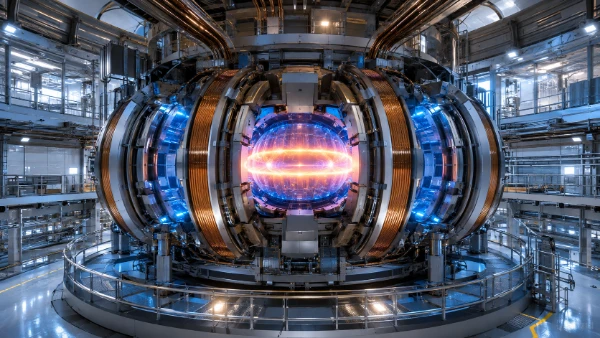
Fusion energy has spent decades moving between impressive laboratory results and the much harder goal of producing useful electricity. One development has changed the pace of that race more than most: high-temperature superconducting, or HTS, magnets. These magnets can create exceptionally strong magnetic fields while taking up less space than many earlier superconducting systems, making smaller and potentially less expensive fusion machines possible. By 2026, HTS technology is no longer limited to laboratory coils. Full magnet assemblies have been tested, an all-HTS tokamak has operated plasma for extended periods, and Commonwealth Fusion Systems is assembling SPARC, a machine designed specifically to demonstrate net fusion energy. Yet no HTS-based reactor is supplying electricity to a grid today. The leading projects therefore need to be judged not by ambitious dates alone, but by what has already been built, tested and integrated into working fusion hardware.
Why High-Temperature Superconducting Magnets Changed the Fusion Race
Magnetic-confinement fusion depends on keeping extremely hot plasma away from the walls of a reactor while maintaining conditions in which atomic nuclei can fuse. Conventional magnets can perform this job in experimental machines, but stronger magnetic fields offer a major advantage: they can confine high-performance plasma in a smaller volume. That matters because a fusion reactor does not become commercially attractive simply by producing fusion reactions. Its magnets, vacuum vessel, cooling equipment, heating systems, shielding and maintenance infrastructure all have to fit into a plant that can realistically be constructed and operated. High-temperature superconductors have therefore attracted attention because they offer a possible route to compact reactors without giving up the magnetic field strength needed for high fusion performance.
The term “high-temperature” is relative. These superconductors still operate at extremely low temperatures, typically tens of degrees above absolute zero, but they do not need to be kept as cold as many traditional superconducting materials. More importantly for fusion, materials such as REBCO can continue carrying very large electrical currents in magnetic fields that would severely limit older superconductors. Engineers can wind thin superconducting tape into powerful coils and use those coils to produce magnetic fields appropriate for compact tokamaks and, increasingly, stellarators. The potential benefit is not merely a smaller experimental device. A stronger field can change the size, construction requirements and economics of an eventual power station.
This is why the 20-tesla large-scale magnet demonstrated by MIT and Commonwealth Fusion Systems in 2021 became such an important reference point. Subsequent examination and testing gave researchers more confidence that the technology could survive the mechanical and electromagnetic stresses expected in a fusion machine. The result did not prove that commercial fusion had been achieved; there was no fusion plasma inside that magnet test. What it did prove was that one of the central assumptions behind a new generation of compact high-field reactors was physically achievable. By 2026, the question has shifted from whether a powerful HTS fusion magnet can be built to whether complete machines using this technology can operate reliably enough to form the basis of power stations.
What Has Actually Been Demonstrated by 2026?
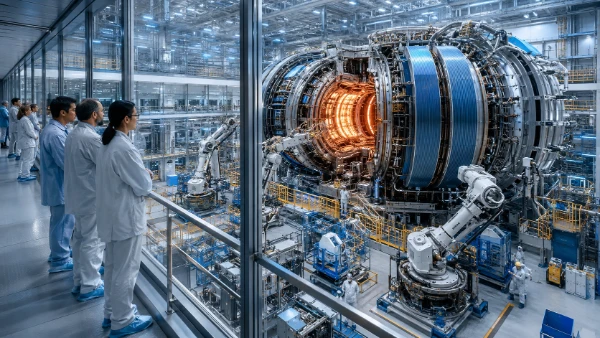
The strongest evidence comes from several projects that have reached different stages of integration. Commonwealth Fusion Systems has moved from testing a prototype magnet to manufacturing the large toroidal-field magnets required for SPARC. Its first completed production toroidal-field magnet, weighing about 24 tonnes, was delivered to the SPARC assembly area in late 2025 and announced in January 2026. SPARC requires 18 of these D-shaped magnets. At the same time, the company has been installing and commissioning supporting equipment for cryogenic cooling, magnet power and plasma heating. During 2026, both halves of the machine’s vacuum vessel were also on site and undergoing preparation for assembly.
Tokamak Energy in the United Kingdom has taken a different route to proving HTS technology. Its Demo4 system combines 44 HTS coils in a complete tokamak-style magnet arrangement rather than testing only an individual high-field coil. In tests reported in late 2025, the system reached 11.8 tesla under fusion-relevant operating conditions. This is significant because a power station does not use one isolated record-breaking magnet. Multiple coils must operate together while experiencing large forces, low temperatures and changing electromagnetic loads. Demo4 is intended to answer these engineering questions and provide practical information for larger magnet systems.
Energy Singularity in China has demonstrated another milestone. Its HH70 machine became the first tokamak in which the main magnet systems are all based on high-temperature superconductors, with first plasma achieved in 2024. In February 2026, the company reported a 1,337-second long-pulse plasma operation. A peer-reviewed description of HH70 has also documented its design and commissioning. This does not mean HH70 is producing net fusion energy: it is a comparatively small research tokamak intended to demonstrate integrated HTS operation and plasma control. Its value lies in showing that superconducting coils, cooling, power supplies and plasma systems can function together for extended operation rather than only during short magnet tests.
Commonwealth Fusion Systems and SPARC Lead the Integrated High-Field Approach
Among HTS-based fusion projects, Commonwealth Fusion Systems currently has perhaps the clearest sequence from magnet development to a machine intended to test fusion gain and then to a proposed grid-connected plant. SPARC, under construction in Devens, Massachusetts, is a compact high-field tokamak developed from research originating at MIT. It is not designed to sell electricity. Its main purpose is to demonstrate that a high-field HTS tokamak can produce more fusion power from its plasma than the external heating power supplied to that plasma, a condition normally described as Q greater than one. Design studies have examined considerably higher fusion gain under nominal operating conditions, but those predictions still have to be demonstrated experimentally.
SPARC is especially important because it combines several technologies that have previously been demonstrated separately. Strong magnets alone are insufficient. The machine needs a vacuum vessel capable of handling plasma-facing components, a powerful cryogenic system, radio-frequency heating, fuel delivery, diagnostics, protection systems and controls that can operate together. By mid-2026, CFS was commissioning more of these supporting systems in preparation for a dry dress rehearsal. The company’s May 2026 construction update said SPARC operations would begin in 2027. That timing is more relevant than older announcements that had referred to first plasma in 2026, illustrating why fusion schedules should always be treated as evolving engineering targets rather than fixed delivery dates.
The next proposed step is ARC, a substantially larger machine intended to function as an actual power station. CFS plans its first ARC plant for Chesterfield County, Virginia, with a targeted net electrical output of about 400 megawatts. During 2025 and 2026 the project moved beyond a purely conceptual future reactor: CFS selected a site, progressed through local development procedures, signed power-purchase arrangements and in April 2026 submitted an interconnection request to PJM, the regional electricity transmission organisation. In June 2026, the company also announced five peer-reviewed papers examining the physics basis of ARC. None of these steps proves that ARC will work, but they show that CFS is addressing grid connection, plant engineering and customers while its experimental predecessor is still being built.
Tokamak Energy and Energy Singularity Show Different Forms of Progress
Tokamak Energy remains one of the most experienced private groups working with both fusion machines and high-temperature superconducting technology, although its path differs from the SPARC-to-ARC sequence. The company operates the ST40 spherical tokamak for plasma research while developing HTS magnets through its dedicated magnet programme. In July 2026, it reported successful site testing of a one-megawatt gyrotron system that is to be installed on ST40 for plasma heating and control. The company has also become the magnet systems partner for the UK’s STEP fusion programme under a contract covering work through March 2029. These activities make Tokamak Energy particularly important as a supplier and developer of fusion magnet technology as well as a fusion research company.
The company’s 2026 direction also shows how the fusion sector is becoming more collaborative. Tokamak Energy joined Type One Energy and AECOM in the UK Infinity Fusion Consortium, which intends to pursue a private-sector fusion power project based on Type One Energy’s stellarator design and Tokamak Energy’s HTS magnet expertise. Tokamak Energy has separately published extensive work on a spherical-tokamak pilot plant developed through the US Department of Energy’s Milestone-Based Fusion Development Program. Its studies describe a future plant producing 800 megawatts of fusion power and about 85 megawatts of net electricity. However, the company stated in August 2026 that it would not itself proceed to construct the specific pilot-plant design documented in those papers. Its present commercial role increasingly combines fusion research, magnet manufacture and participation in larger national and industrial programmes.
Energy Singularity occupies yet another position. HH70 is already an operating all-HTS tokamak, giving the Chinese company valuable experience that competitors whose complete HTS machines have not yet produced plasma do not have. Its long-pulse result is particularly relevant to future power generation because commercial plants cannot depend on experiments that last only a fraction of a second. At the same time, duration must not be confused with fusion performance. A long-lasting plasma is useful only one part of the problem; a power reactor must also reach temperatures, density and confinement conditions capable of producing large amounts of fusion energy. HH70 has demonstrated engineering integration and long operation, not net energy production. The next machines in Energy Singularity’s programme will therefore be more informative about how far its technology can scale towards power-producing conditions.
The Remaining Gap Between Powerful Magnets and Practical Electricity
HTS magnets solve an important problem, but they do not remove the difficult engineering surrounding a fusion power station. A deuterium-tritium reactor must manage a continuous stream of high-energy neutrons produced by fusion. Those neutrons gradually damage materials, activate components and deposit heat in the surrounding structure. Magnets have to be protected from this environment by shielding, yet additional shielding increases the size of the machine and affects its economics. Engineers must also develop plasma-facing materials capable of surviving intense heat loads, particularly around the divertor, where heat and particles are deliberately directed out of the plasma. These challenges become much more demanding when a device moves from experimental pulses to repeated or continuous high-power operation.
Fuel supply is another major issue. Deuterium is widely available, but tritium is scarce and radioactive. Most commercial reactor concepts therefore plan to breed tritium inside the plant by surrounding the fusion chamber with lithium-containing blankets. A practical reactor will have to produce enough tritium to replace the amount it consumes while extracting useful heat and providing neutron shielding. This is one reason why CFS joined the UK Atomic Energy Authority’s Lithium Breeding Tritium Innovation programme in 2026. Magnet performance can be tested years before all of these fuel-cycle requirements are demonstrated together, which is why a successful SPARC experiment would still leave substantial engineering work between fusion gain and a commercial ARC plant.
Economics may ultimately be as important as plasma physics. An HTS reactor will require large quantities of superconducting tape, specialised structural materials, cryogenic machinery, remote-maintenance equipment and components manufactured to tight tolerances. The first plant is unlikely to represent the cost of later units produced through a mature supply chain. Reliability will also determine whether attractive theoretical electricity costs can be realised in practice. A reactor that repeatedly stops for lengthy repairs would struggle economically even if its plasma performs well. For that reason, the most credible programmes in 2026 are beginning to treat manufacturability, grid connection, maintenance, fuel supply and component lifetime as central fusion problems rather than tasks that can be addressed after the plasma physics is solved.
Who Is Closest to Practical Fusion Power in 2026?
If “closest” means the project with the most advanced integrated route from an HTS demonstration magnet to a net-energy tokamak and then to a specified commercial power station, Commonwealth Fusion Systems currently has the strongest case. Its key magnet technology has been tested at full scale, production magnets are being manufactured, SPARC is physically under construction and current company updates place operations in 2027. ARC has a selected site in Virginia, a proposed output of roughly 400 megawatts net, peer-reviewed physics studies and an application to connect to the PJM electricity system. These are unusually concrete commercial preparations for fusion. They do not guarantee that the early-2030s ARC schedule will be met. The decisive evidence will come from SPARC itself, particularly whether the machine reaches the fusion gain required to validate the high-field approach.
That assessment does not make the other HTS programmes secondary. Energy Singularity has already operated the world’s first fully HTS tokamak and has demonstrated long-duration plasma operation, giving it a lead in one type of integrated engineering experience. Tokamak Energy has demonstrated a complete high-field HTS magnet system and has become an important magnet partner for STEP and the Infinity Fusion Consortium. Type One Energy is applying HTS technology to a stellarator rather than a conventional tokamak. Its Infinity One engineering machine at the Tennessee Valley Authority’s Bull Run site is scheduled for commissioning in 2029, while the proposed Infinity Two power plant is intended to produce about 400 megawatts of electricity in the following decade. Stellarators offer the attraction of steady-state operation, but Type One Energy’s large HTS stellarator has yet to be built and operated.
The state of the field in 2026 is therefore more mature than the familiar claim that fusion is always decades away, but it is not yet an electricity-generating industry. HTS magnets have removed one major obstacle by making very strong fields practical at reactor-relevant scale, and several groups have progressed from materials research to complete magnet assemblies or working fusion devices. The next few years should provide much clearer evidence. SPARC will test whether compact high-field tokamaks can achieve net fusion energy; Energy Singularity will attempt to scale beyond HH70; Type One Energy must turn advanced stellarator magnet designs into Infinity One; and Tokamak Energy will continue industrialising HTS systems for several programmes. Until a plant repeatedly sends net electricity to a grid, practical fusion remains an engineering objective rather than an accomplished energy source. By the evidence available in 2026, however, HTS magnets have moved that objective noticeably closer to a testable reality.
Popular articles
-
 Miniature Nuclear Batteries: Can Radioisot...
A battery that keeps working for twenty, fifty or even hundreds of …
Learn more -
Fusion Reactors with High-Temperature Supe...
Fusion energy has spent decades moving between impressive laboratory results and the …
Learn more -
 Spatial Casinos: How Mixed Reality and vis...
Casino interfaces are moving beyond flat screens. In 2026, spatial computing offers …
Learn more