
Digital Twins of Cities and Factories: How Virtual Models Improve Real-World Management
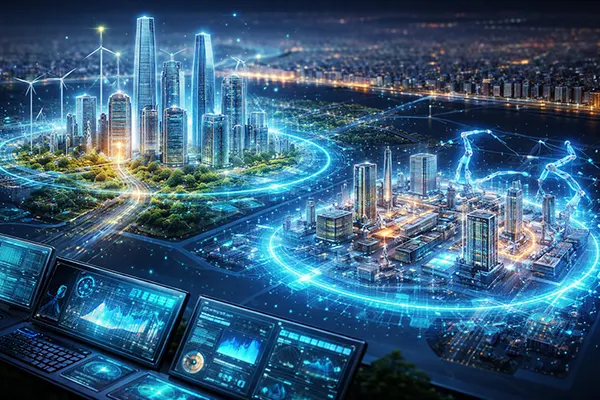
Digital twins have moved from experimental engineering tools to practical systems used by governments and industry in 2026. A digital twin is a dynamic virtual replica of a physical object, process, or entire environment that is continuously updated with real-time data. Cities, factories, energy networks and transport systems increasingly rely on these models to test decisions, predict failures and optimise performance without risking real-world disruption. This approach allows decision-makers to act based on measurable scenarios rather than assumptions.
What Digital Twins Are and How They Function in Practice
A digital twin combines sensor data, simulation software and data analytics to mirror the behaviour of a real system. In modern implementations, Internet of Things (IoT) devices collect information from equipment, infrastructure or urban systems and feed it into a virtual model. This model is not static; it evolves as conditions change, making it possible to analyse both current performance and future outcomes.
In factories, digital twins replicate production lines, machines and workflows. Engineers can monitor equipment wear, detect inefficiencies and simulate process changes before applying them physically. This reduces downtime and helps maintain consistent product quality. Companies such as Siemens and GE have already integrated digital twins into industrial operations, reporting measurable improvements in maintenance planning.
At the city level, digital twins represent infrastructure such as roads, utilities and public services. Authorities use them to analyse traffic patterns, energy consumption and environmental impact. By combining historical data with predictive models, cities can plan infrastructure upgrades more accurately and respond faster to unexpected situations.
Core Technologies Behind Digital Twins
The effectiveness of digital twins depends on several interconnected technologies. IoT sensors provide continuous streams of data, while cloud computing ensures that large datasets can be processed and stored efficiently. Without scalable infrastructure, real-time modelling would not be feasible at the level required for cities or industrial systems.
Artificial intelligence and machine learning play a central role in interpreting incoming data. These systems identify patterns, detect anomalies and generate predictions. For example, predictive maintenance algorithms can estimate when a machine is likely to fail, allowing operators to intervene before breakdowns occur.
Another important component is simulation software. Advanced modelling tools create realistic representations of physical systems, including environmental variables and human interactions. This allows digital twins to test multiple scenarios, from minor operational adjustments to large-scale system changes.
Applications in Urban Management and Smart Cities
Urban digital twins are increasingly used to manage complex city systems. By integrating data from transport, energy, water and communication networks, city planners gain a unified view of operations. This helps identify inefficiencies that would otherwise remain hidden across separate departments.
Traffic management is one of the most visible use cases. Digital twins simulate vehicle flows and pedestrian movement, enabling authorities to adjust traffic signals, redesign routes or test infrastructure changes. Cities such as Singapore and Helsinki have already implemented these systems to reduce congestion and improve mobility.
Environmental monitoring is another key area. Digital twins track air quality, noise levels and energy consumption in real time. This allows local governments to evaluate the impact of policies, such as low-emission zones, and make adjustments based on measurable outcomes rather than estimates.
Improving Public Services Through Simulation
Digital twins support emergency planning by modelling disaster scenarios such as floods, fires or power outages. Authorities can simulate response strategies and identify weaknesses in advance, improving preparedness without exposing citizens to risk.
Public transport systems also benefit from virtual modelling. Operators can test schedule changes, passenger flows and infrastructure upgrades before implementing them. This reduces disruptions and ensures that changes are based on realistic demand forecasts.
Energy management becomes more efficient when cities use digital twins to balance supply and demand. By analysing consumption patterns, authorities can optimise energy distribution, integrate renewable sources and reduce waste across the grid.
Industrial Use Cases and Business Impact
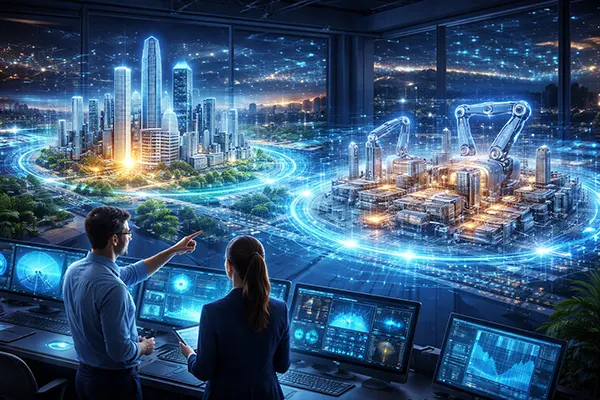
In industrial environments, digital twins have become a standard tool for improving efficiency and reducing operational risks. Manufacturers use them to simulate production processes, identify bottlenecks and test new configurations without interrupting actual operations.
Predictive maintenance is one of the most valuable applications. By analysing real-time data from machines, digital twins can detect early signs of wear or malfunction. This allows companies to schedule maintenance at the right time, avoiding both unexpected failures and unnecessary servicing.
Supply chain optimisation is another area where digital twins provide measurable benefits. By modelling logistics networks, companies can test different delivery routes, inventory strategies and supplier scenarios. This helps reduce costs and improve resilience in the face of disruptions.
Challenges and Limitations of Digital Twin Adoption
Despite their advantages, digital twins require significant investment in infrastructure and data integration. Collecting accurate, real-time data from multiple sources can be complex, especially in older facilities or cities with legacy systems.
Data security and privacy are also critical concerns. As digital twins rely on continuous data streams, protecting sensitive information becomes essential. Organisations must implement strong cybersecurity measures to prevent unauthorised access or data breaches.
Another limitation is the need for skilled specialists who can manage and interpret complex models. Without proper expertise, organisations may struggle to extract meaningful insights from digital twin systems. This highlights the importance of training and interdisciplinary collaboration in successful implementation.
Popular articles
-
 Miniature Nuclear Batteries: Can Radioisot...
A battery that keeps working for twenty, fifty or even hundreds of …
Learn more -
 Fusion Reactors with High-Temperature Supe...
Fusion energy has spent decades moving between impressive laboratory results and the …
Learn more -
 Spatial Casinos: How Mixed Reality and vis...
Casino interfaces are moving beyond flat screens. In 2026, spatial computing offers …
Learn more