
Passive Cooling in Data Centres in 2026: Practical Solutions Gaining Ground
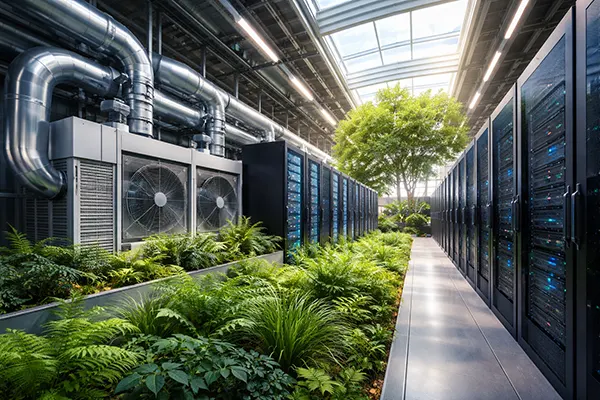
Energy efficiency has moved from a secondary concern to a core engineering priority in data centre design. Rising electricity costs, stricter environmental targets and increasing compute density are forcing operators to rethink how heat is managed. Passive cooling is no longer an experimental concept; in 2026, it is becoming part of real infrastructure strategies. Instead of relying solely on energy-intensive chillers, operators are adopting designs that reduce heat generation and remove it with minimal mechanical input.
Why Passive Cooling Is Becoming a Core Design Principle
Modern data centres generate enormous heat loads due to high-performance processors, AI workloads and dense rack configurations. Traditional cooling methods based on compressors and chilled water systems remain effective, but they consume a significant share of total facility energy. In some cases, cooling can account for up to 40% of electricity usage, which directly affects operational costs and sustainability metrics.
Regulatory pressure is another key factor. Across Europe and other regions, stricter requirements on energy efficiency and carbon emissions are pushing operators to lower Power Usage Effectiveness (PUE). Passive cooling approaches, such as free air cooling or thermal zoning, help reduce reliance on active systems and improve compliance with environmental standards without sacrificing performance.
There is also a shift in how data centres are located and designed. Instead of building large facilities in generic industrial zones, companies increasingly choose locations with favourable climates, access to renewable energy, and natural cooling advantages. This trend aligns with passive cooling strategies, allowing operators to integrate environmental conditions directly into infrastructure planning.
Key Drivers Behind Adoption in 2026
The rapid expansion of artificial intelligence infrastructure has significantly increased thermal output per rack. GPUs and specialised accelerators generate concentrated heat, making traditional air cooling less efficient. Passive techniques, when combined with targeted liquid solutions, help distribute and dissipate this heat more effectively.
Water scarcity is also influencing design decisions. Some cooling methods require large volumes of water, which is not sustainable in many regions. Passive air-based or hybrid systems reduce dependency on water resources, making them more viable in areas facing environmental constraints.
Finally, long-term cost predictability is a major driver. Passive systems often involve higher initial design complexity, but they reduce operational expenses over time. Lower maintenance requirements and reduced energy consumption make them attractive for operators planning infrastructure lifecycles of 10–20 years.
Passive Cooling Technologies Now Used in Practice
One of the most widely implemented solutions in 2026 is indirect free air cooling. This method uses external air to absorb heat without directly exposing servers to outside conditions. Heat exchangers transfer thermal energy from internal air to cooler external air, reducing the need for mechanical cooling systems while maintaining controlled humidity and cleanliness.
Another important approach is liquid-assisted passive cooling, particularly rear-door heat exchangers and cold plate systems. While not fully passive, these technologies significantly reduce reliance on active cooling by capturing heat directly at the source. Combined with natural heat dissipation techniques, they create hybrid systems that are far more efficient than traditional designs.
Thermal architecture optimisation is also playing a major role. Hot and cold aisle containment, airflow separation, and intelligent rack placement allow facilities to use passive airflow more effectively. By guiding heat in predictable paths, operators minimise mixing of hot and cold air, which improves overall efficiency without additional energy input.
Emerging Solutions Moving Beyond Pilot Stage
Submersion cooling using dielectric fluids is moving closer to large-scale adoption. While it requires specialised infrastructure, it enables near-complete elimination of traditional air cooling. Passive heat transfer through fluid circulation allows systems to operate at higher densities with minimal mechanical cooling.
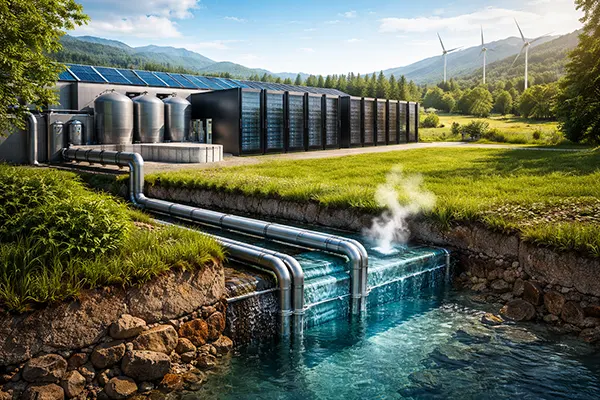
Geothermal-assisted cooling is another area gaining traction. By using stable underground temperatures, data centres can dissipate heat naturally through buried heat exchange systems. This approach is particularly effective in regions with suitable geological conditions and offers long-term energy savings.
Heat reuse is becoming an integral part of passive cooling strategies. Instead of treating heat as waste, facilities are redirecting it to nearby buildings, district heating systems or industrial processes. This not only improves energy efficiency but also creates additional value streams for operators.
Design Strategies That Maximise Passive Efficiency
Site selection is now one of the most critical design decisions. Cooler climates, proximity to water bodies, and access to renewable energy sources all influence the effectiveness of passive cooling. Nordic countries, for example, continue to attract large-scale data centre investments due to their natural advantages.
Building design has also evolved. Data centres are increasingly constructed with materials and layouts that support natural heat dissipation. High ceilings, optimised ventilation paths and thermally efficient materials help maintain stable internal temperatures without heavy reliance on mechanical systems.
Advanced monitoring systems play a key role in making passive cooling viable. Sensors, AI-driven analytics and predictive modelling allow operators to adjust airflow, workload distribution and thermal zones in real time. This ensures that passive systems operate at peak efficiency under changing conditions.
Challenges and Practical Limitations
Despite its advantages, passive cooling is not a universal solution. In regions with hot or humid climates, its effectiveness is limited, and hybrid systems remain necessary. Operators must carefully evaluate environmental conditions before committing to fully passive designs.
Initial design complexity can also be a barrier. Passive systems require precise planning, simulation and integration with IT infrastructure. Mistakes at the design stage can lead to inefficiencies that are difficult to correct later.
Finally, retrofitting existing data centres presents challenges. Many facilities were not designed with passive cooling in mind, making upgrades costly and technically demanding. As a result, the most effective implementations are often found in new builds rather than legacy environments.
Popular articles
-
 Miniature Nuclear Batteries: Can Radioisot...
A battery that keeps working for twenty, fifty or even hundreds of …
Learn more -
 Fusion Reactors with High-Temperature Supe...
Fusion energy has spent decades moving between impressive laboratory results and the …
Learn more -
 Spatial Casinos: How Mixed Reality and vis...
Casino interfaces are moving beyond flat screens. In 2026, spatial computing offers …
Learn more